

In this guide8 sections
- 01What Rental Yield Can You Expect in Alanya?
- 02Gross vs Net Rental Yield: What Is the Difference?
- 03Long-Term Letting vs Holiday Letting in Alanya
- 04Occupancy and Seasonality: How Many Weeks Will You Really Let?
- 05Costs That Reduce Your Rental Yield
- 06Rental Yields by Area in Alanya
- 07Worked Example: A 2+1 Flat in Mahmutlar
- 08How to Improve Your Yield Without Taking On Extra Risk
Rental yield in Alanya is usually quoted somewhere between 5% and 10%, but the honest answer depends on whether you are looking at gross or net figures, at long-term tenants or holiday guests, and at which neighbourhood. Based on asking prices and asking rents in October 2026, most parts of Alanya show a gross long-term yield of roughly 4–6% a year.
This guide explains how to calculate rental yield properly, which costs reduce it, how seasonality affects holiday letting and what a realistic return looks like for a typical 2+1 flat. Use it to sense-check any figure you are given before you buy.
What Rental Yield Can You Expect in Alanya?
Listing data from October 2026 puts the average asking price for a flat in Alanya at around TRY 63,000 per m² and the average asking rent at around TRY 26,000 a month. Divide a year of that rent by the price and you arrive at a gross yield of about 5%, which means the rent would take roughly 20 years to repay the purchase price before costs.
That is lower than many brochures suggest. Asking prices rose by about 18% in lira terms over the past year and rents rose at a similar pace, so yields have stayed fairly flat. Figures of 6–10% quoted for holiday-let studios are usually gross, assume strong occupancy and leave out running costs.
All prices and rents in this guide are asking figures from listings, not completed transactions, and are shown in nominal lira. They are a good guide to direction, not a valuation of a specific home.
Gross vs Net Rental Yield: What Is the Difference?
Gross rental yield is the annual rent divided by the purchase price. It is quick to calculate and useful for comparing areas, but it ignores every cost of owning and letting a property.
Net rental yield takes the annual rent, subtracts empty periods and the costs you pay as a landlord, and divides the result by your total investment, including the purchase costs of roughly 4–8% on top of the price. Net yield is the figure that tells you what actually reaches your bank account.
- Gross yield = annual rent ÷ purchase price × 100
- Net yield = (annual rent − vacancy − running costs) ÷ (price + purchase costs) × 100
As a rule of thumb, a well-run long-term let in Alanya loses one to two percentage points between gross and net. A holiday let can lose considerably more, because cleaning, utilities, platform commissions and management all come out of the owner's side.
Long-Term Letting vs Holiday Letting in Alanya
Alanya has two distinct rental markets: long-term tenants, from local families to foreign residents who rent before they buy, and holiday guests who pay much more per night, but only for part of the year.
Long-term letting
- Stable monthly income, usually paid in lira
- Tenant normally pays utilities and often the aidat
- Low management workload once a good tenant is in place
- Rent rises at renewal are capped at the 12-month CPI average
- No tourism licence required
Holiday letting
- Higher nightly rates, often priced in euros
- Income concentrated in roughly five to six months
- Owner pays utilities, cleaning, linen and platform fees
- Requires a short-term rental permit and building consent
- Heavy fines for letting without a permit
For many overseas owners the deciding factor is not the headline return but the rules. Since 2024, renting a home for up to 100 days at a time needs a permit from the Ministry of Culture and Tourism, and in an apartment building the other owners must generally agree. Read our guide to the short-term rental licence in Turkey before you plan a holiday-let business.
Watch out: Letting without a permit is fined per unit. In 2026 the fine is around TRY 180,000 on the first finding, rising to roughly TRY 900,000 and then TRY 1.8 million if the let continues. Our team can check whether a specific building already allows holiday letting before you commit.
Occupancy and Seasonality: How Many Weeks Will You Really Let?
Alanya's season is long by Mediterranean standards. Demand builds from April, peaks in July and August and remains reasonable into October, helped by flights into both Antalya and Gazipaşa-Alanya airports. From November to March, holiday demand falls sharply and many short-term lets sit empty or switch to monthly winter tenants.
Model a holiday let on realistic occupancy, not a best case. A well-presented flat near the beach may be booked for most of the summer; a flat far from the sea without a pool will struggle outside peak weeks.
Long-term lets have their own vacancy risk. Allow for at least one empty month between tenants for viewings, cleaning and small repairs, and remember that winter is a quieter time to find new tenants in coastal areas.
Tip: Some owners combine both approaches: a monthly winter tenant from November to April and holiday guests in summer. It smooths income, but only works if your permit, building rules and contracts allow it.
Costs That Reduce Your Rental Yield
These are the main costs to subtract when you move from gross to net yield. Who pays each one depends on your contract and on whether you let long-term or to holidaymakers.
- Aidat (site maintenance fee): commonly EUR 30–200 a month depending on facilities. Long-term tenants usually pay it, but holiday-let owners pay it themselves.
- Property tax (emlak vergisi): 0.2% of the municipal tax value for a residence in Alanya, which is usually well below market value. It is paid in two instalments, in May and November.
- DASK and home insurance: compulsory earthquake insurance renewed every year, plus optional contents and landlord cover. See our guide to DASK and home insurance.
- Management fees: tenant finding, rent collection, check-ins and maintenance coordination. Holiday-let management costs considerably more than long-term management because of the work involved.
- Furnishing and wear: holiday lets need durable furniture, linen, kitchen equipment and regular replacement. Budget for it as a recurring cost, not a one-off.
- Utilities and cleaning: paid by the owner on holiday lets, often the largest monthly expense in summer because of air conditioning.
- Licence and compliance: the short-term rental permit, guest registration and periodic inspections take time and sometimes professional help.
- Tax on rental income: rental income from a Turkish property is taxable in Turkey and is declared in March of the following year. For 2026, residents have a residential rent exemption of TRY 58,000, but whether it applies to non-resident owners is not clear, so take advice from a Turkish accountant (mali müşavir).
Our guide to the annual running costs of a property in Alanya covers aidat, property tax and insurance in more detail.
Rental Yields by Area in Alanya
Yields vary more between neighbourhoods than many buyers expect. Areas where prices are still moderate relative to rents tend to show higher gross yields, while prestige areas with sea views and newer complexes often show lower yields but stronger resale demand.
| Area | Avg asking price (TRY/m²) | Avg asking rent (TRY/month) | Gross yield |
|---|---|---|---|
| Avsallar | about 58,500 | about 18,800 | about 5.9% |
| Oba | about 67,100 | about 26,500 | about 5.5% |
| Mahmutlar | about 59,100 | about 26,300 | about 5.4% |
| Kestel | about 71,500 | about 28,400 | about 5.2% |
| Tosmur | about 61,500 | about 28,300 | about 5.2% |
| Kargıcak | about 74,400 | about 34,300 | about 4.8% |
| Centre (Saray, Kleopatra) | about 68,500 | about 28,200 | about 4.5% |
| Konaklı | about 62,200 | about 21,300 | about 4.0% |
Source: asking prices and rents for flats on a national listing portal, October 2026. Figures are averages across very different properties, so a specific flat can sit well above or below them. Our guide to the best areas to invest in Alanya looks at demand, tenant profiles and resale potential area by area.
Worked Example: A 2+1 Flat in Mahmutlar
To show how gross and net yield differ in practice, here is a simplified long-term letting example. All figures are approximate and for illustration only; euro amounts use about TRY 55 to EUR 1.
| Item | Per year (TRY) | Notes |
|---|---|---|
| Purchase price | 5,900,000 | About 100 m² gross at the area average, roughly EUR 107,000 |
| Purchase costs (about 6%) | 354,000 | Title deed fee, fees, translation, insurance |
| Rent (TRY 26,000 × 12) | 312,000 | Gross yield on price: about 5.3% |
| One empty month | −26,000 | Change of tenant, cleaning |
| Management (about 10%) | −28,600 | Assumed, varies by provider |
| Property tax, DASK, insurance | −10,500 | Approximate |
| Maintenance reserve | −15,000 | Paint, appliances, small repairs |
| Net income before tax | 231,900 | Net yield on total cost: about 3.7% |
In this example the tenant pays utilities and the aidat. If you pay the aidat yourself, the net yield drops further. Income tax would then be due on the taxable part of the rent, depending on your residence status and any exemption you qualify for.
The return in your own currency also depends on the exchange rate. Rents in Alanya are mostly agreed in lira and can be raised at renewal by up to the 12-month inflation average, which was 31.49% for October 2026 renewals. If the lira weakens faster than rents rise, your euro or sterling return falls, and the reverse is also true.
How to Improve Your Yield Without Taking On Extra Risk
- Buy at the right price: the purchase price has the biggest effect on yield. A property bought 5% below market lifts your yield for as long as you own it.
- Choose a layout tenants want: 1+1 and 2+1 flats with a balcony, air conditioning and a pool are the easiest to let in Alanya.
- Check the aidat and building rules: a complex with lavish facilities can earn more rent but cost more than it brings in, and for holiday letting you need to know whether other owners already hold permits.
- Plan for management from day one: good local management reduces vacancy and protects the property. See our guide to letting and managing your Alanya property from abroad.
If you are comparing several flats, Selectum Property can prepare a simple rent estimate for each one, based on current local demand rather than brochure figures.
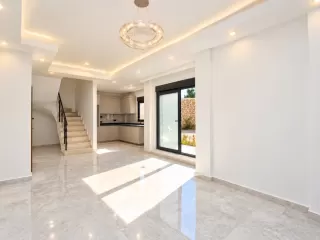
Oba, Alanya
2+1 Duplex Living with Private Garden in New Project in Oba
- 2+1
- 110 m²
- 2.7 km
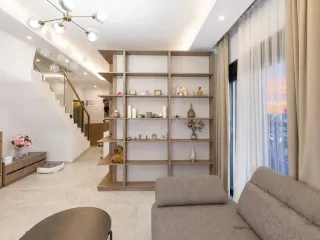
Avsallar, Alanya
Bali Concept 4+1 Duplex Apartment For Sale In Avsallar Alanya
- 4+1
- 146 m²
- 550 m
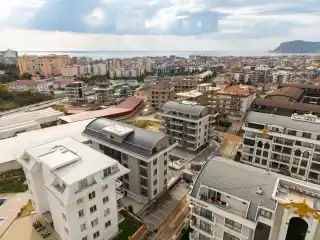
Oba, Alanya
Investment in Oba | Brand New 1+1 Suitable for Short-term Rental
- 1+1
- 53 m²
- 1.2 km
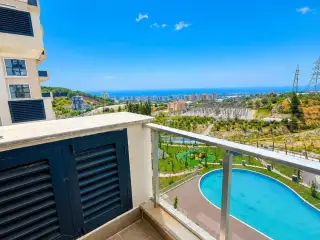
Mahmutlar, Alanya
Mahmutlar'da Deniz Manzaralı & Kısa Dönem Kiralamaya Uygun 1+1
- 1+1
- 45 m²
- 3 km
Oba, Alanya
For Sale 1+1 Apartment in Oba Alanya | Licensed, Luxury, Suitable for Daily Rental
- 1+1
- 53 m²
- 1.2 km

Payallar, Alanya
Magnificent Sea View Brand New Luxury 1+1 in Payallar
- 1+1
- 45 m²
- 2 km
Frequently asked questions
What is a good rental yield in Alanya?
In October 2026 most Alanya neighbourhoods show a gross long-term yield of roughly 4–6% based on asking prices and rents. After vacancy and running costs, a net yield of around 3–4.5% is a realistic target for a well-bought long-term let. Higher figures are possible but usually depend on a below-market purchase price or successful holiday letting.
Is holiday letting more profitable than long-term letting in Alanya?
Holiday letting can produce higher gross income because nightly rates in summer are much higher than monthly rents. However, the owner pays utilities, cleaning, platform fees and higher management costs, and income is concentrated in about five or six months. You also need a short-term rental permit and, in most apartment buildings, the consent of the other owners.
Do I need a licence to rent my Alanya flat on Airbnb?
Yes. Under Law 7464, renting a home to tourists for up to 100 days at a time requires a permit from the Ministry of Culture and Tourism, applied for via e-Devlet. Letting without a permit can lead to fines of around TRY 180,000 per unit in 2026, rising sharply if the let continues.
Do foreign owners pay tax on rental income in Turkey?
Yes. Rent from a property in Turkey is taxable in Turkey regardless of where the owner lives, and the income is declared each March for the previous year. The 2026 residential rent exemption of TRY 58,000 is clear for residents, but its use by non-resident owners is not confirmed, so ask a Turkish accountant before you file.
How much can I increase the rent each year?
For residential lease renewals, the increase is capped at the average annual consumer price inflation of the previous 12 months. For renewals in October 2026 the cap was 31.49%. The cap applies to renewals; the rent for a new tenant is agreed freely.
Which area of Alanya has the highest rental yield?
On October 2026 asking data, Avsallar, Oba and Mahmutlar show some of the highest gross yields, at around 5.4–5.9%, while the centre and Konaklı are lower. Averages hide big differences between buildings, so compare specific flats rather than relying on area figures alone.
Your question is not here?
General information, not legal advice. Rules and fees change; we confirm the current situation for your case.
Thank you. Share it with someone who is planning to buy.

